
Rising crude oil prices, traction in China equities and inflation concerns back home are casting a shadow on the Indian equity markets in the short term, believe analysts at Jefferies. They said this could see the markets remaining range-bound in the near term before the next leg up.

The reason for the stickiness in bond yields can be many, but the most responsible is the liquidity deficit stance taken by RBI, says Anup Roy.

Retail investors may safely invest in shorter-duration funds, suggests Sanjay Kumar Singh.

In the backdrop of an over four-decade high inflation, the US Federal Open Market Committee has raised its key policy interest rate by 75 basis points to 2.25-2.50 per cent, anticipating that the increase in the interest rates will be "appropriate". Hiking interest rates typically cool demand in the economy, thereby putting a brake on the inflation rate. The US Federal Reserve in its June meeting too raised the interest rate by 75 basis points, which was the steepest hike since 1994.

As inflation rate is near the upper limit of the comfort zone, experts rule out rate cuts anytime soon

Das favoured shifting the stance of monetary policy from neutral to accommodative to send a clear signal, indicating that more measures could be taken in the near future to boost growth.

The rupee plunged 90 paise to close at an all-time low of 80.86 (provisional) against the US dollar on Thursday after the US Federal Reserve's interest rate hike and its hawkish stance weighed on investor sentiments. Forex traders said the US Fed's rate hike and escalation of geopolitical risk in Ukraine sapped risk appetite. Moreover, the strength of the American currency in the overseas market, a muted trend in domestic equities, risk-off mood and firm crude oil prices weighed on the rupee.

The sudden movement of the rupee - post the monetary policy - is not a reason to panic, said currency dealers. According to them, a correction was overdue for the rupee that remained the best performing currency in the region for well over a month. The rupee closed at 74.72 a dollar on Friday from its previous close of 74.60. It had dropped 1.52 per cent against the dollar on April 7 after the Reserve Bank of India (RBI) announced its monetary policy, committing to buy Rs 1 trillion of bonds in the June quarter. A weak rupee goes well with the export narrative of the government, and is consistent with the RBI's intervention strategy that prevented an appreciation.
By no means do economists see the Reserve Bank of India stop at just a 25-bp cut. Some of the economists such as Soumyakanti Ghosh of State Bank of India are of the firm view that rates have room to fall by a total of 75 bps in the current financial year, starting with 25 bps in the August 7 policy.

Despite the 3 per cent gain in September 2019, the FPI sell-off during the quarter has seen the benchmark indices - the S&P BSE Sensex and the Nifty 50 register negative returns in Q3CY19.

The bull run in the Indian equity markets is intact, said analysts at Morgan Stanley in a recent note. They expect the S&P BSE Sensex to hit 80,000 levels by December 2023 in their bull-case scenario, to which they have assigned a 30 per cent probability. From the current level, this translates into an upside of nearly 29 per cent.

India Inc said policymakers should take doable steps to revive fixed investments and production of capital goods
'The rate cut could have been higher in the current economic conditions which would have had a stronger impact on business sentiment and spurred investment in a big way.'

'The Chinese devalued the yuan initially but then stopped'.
.jpg)
The repo rate continues to be at 8 per cent while the cash reserve ratio has also been retained at 4 per cent despite inflation based on the Wholesale Price Index coming down to a 5-year low of 1.77 per cent in October.

'We should look at is full year's growth rather than quarter numbers.'

'We have delivered a bitter medicine. It will take time to work.'

'Most importantly, marking a departure from the past, the RBI has made it clear that it is not overtly worried about the level of the local currency,' notes Tamal Bandyopadhyay.
At least a 25 basis points hike can be expected on the October 5 policy
Chances of a rate cut in April improve if core inflation continues to ease, growth falling below the projected 7.2% for FY19 and if the global trade slowdown exacerbates.

Here are the key decisions announced by the Reserve Bank of India on Thursday.

The uncertainty created by the jump in COVID-19 infections and localised lockdowns prompted RBI Governor Shaktikanta Das and other members of the rating setting panel MPC to unanimously vote for status quo in interest rates and an accommodative policy stance to support growth, as per minutes of the meeting released on Thursday. "The need of the hour is to effectively secure the economic recovery underway so that it becomes broad-based and durable," the Governor said during the three-day meeting of the Monetary Policy Committee (MPC) which ended on April 7. The renewed jump in COVID-19 infections in several parts of the country and the associated localised and regional lockdowns add uncertainty to the growth outlook, he observed, as per the minutes of the meeting released by the central bank.

'In 2022, active management, long-short strategies, multi-asset strategies, and asset allocation strategies need to be considered to meet long-term investment goals.'
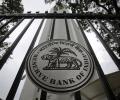
The non-food component in the price basket will continue to keep inflation at a high level and result in a "long pause" in interest rates, a foreign bank said on Wednesday. The central bank is likely to pare the pandemic-driven emergency response as well, the report by Singaporean lender DBS said. It can be noted that the high inflation driven by the food prices has forced the RBI to go for a status quo in rates for the three consecutive reviews of the bi-monthly policy meetings, even as growth continues to be in the negative territory.
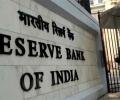
Headed by Urjit Patel, MPC for the fourth straight time kept the repo rate unchanged, at which it lends to the banks, at 6.25 per cent. The reverse repo, at which RBI borrows, will be 6 per cent.
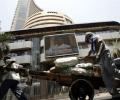
The banking, oil and metal sectors were the top sectoral losers on the BSE, while IT stocks rendered support at lower levels.

Ahead of the 2023-24 Union Budget, the thinking at the top level of the central government is clear: Gross domestic product (GDP) growth of 6-6.5 per cent is a comfortable enough target for FY24 and the focus should be on fiscal consolidation to ensure that the sovereign cost of borrowing does not become prohibitively expensive in a high-interest rate environment, according to people in the know. Those aware of deliberations between the Prime Minister's Office (PMO) and the Ministry of Finance said while the Budget would look to strike a balance between infrastructure investment and welfare schemes, it is unlikely to be populist, though it will be the last full-year Budget before the 2024 Lok Sabha election. Incidentally, 6-6.5 per cent GDP growth is what the upcoming 2022-23 Economic Survey is expected to project for FY24.

The market direction will be guided by corporate earnings, especially the oil & gas companies, since they were responsible for earnings disappointment in the past quarter as well.

Shaktikanta Das said in Washington, DC, that there was nothing sacrosanct about the 25 bps rate cut and that monetary policy could be well served by calibrating the size of the policy rate to the dynamics of the situation, and the size of the change itself could convey the stance of policy.

The year 2015 is likely to see lower rates to support growth and the Reserve Bank is expected to cut key policy rates by 0.25 per cent in February's monetary policy review meet, says a Bank of America Merrill Lynch report.

The 30-share Sensex ended up 292 points at 29,571 and the 50-share Nifty closed up 75 points at 8,910.
.jpg)
Declining prices of food items like vegetables pulled down retail inflation to 5.59 per cent in July, bringing it back within the RBI's comfort zone after two months, official data showed on Thursday. The retail inflation based on the Consumer Price Index (CPI) had remained above 6 per cent during May and June. The government has mandated the RBI to maintain retail inflation at 4 per cent, with a margin of 2 per cent on either side. The CPI based inflation stood at 6.26 per cent in June 2021 and 6.73 per cent in July 2020.
Probably in August. We can argue whether RBI is dovishly neutral or neutrally dovish but the telltale signs of at least one more rate cut are strewn all over the policy statement, points out Tamal Bandyopadhyay.

After unseasonal rains, supply disruptions and pandemic-induced woes pushed retail inflation well over the Reserve Bank's comfort zone in 2020, the scenario is likely to stay that way at least in the short term as economic recovery slowly gains foothold. For most part of this year, pricier food items pushed the retail inflation, based on Consumer Price Index (CPI), higher in the range of 6.58-7.61 per cent, except for March when the reading was 5.91 per cent. Experts believe retail inflation is likely to average around 6.3 per cent this fiscal and mostly will remain sticky going forward owing to pick-up in demand across sectors.

The Reserve Bank of India cut its repo rate by 25 basis points to 6.50 per cent.

The Reserve Bank on Wednesday hiked key benchmark policy rate by 25 basis points to 6.5 per cent, citing sticky core inflation. This is the sixth time interest rate has been hiked by the Reserve Bank of India (RBI) since May last year, taking the total quantum of hike to 250 basis points. Announcing the bi-monthly monetary policy, RBI Governor Shaktikanta Das said the Monetary Policy Committee (MPC) by a majority decided to raise the policy repo rate by 25 basis points and keep a 'strong vigil' on inflation outlook.

Public investment is very crucial for GDP growth, says finance ministry.

Investors turned cautious weighing weak GDP numbers and continued drop in automobile sales, bringing banking and auto sector stocks under pressure.

Urjit Patel panel wanted all members to be appointed by RBI

This follows a staggering inflow of Rs 19,967 cr in equities and debt last month
